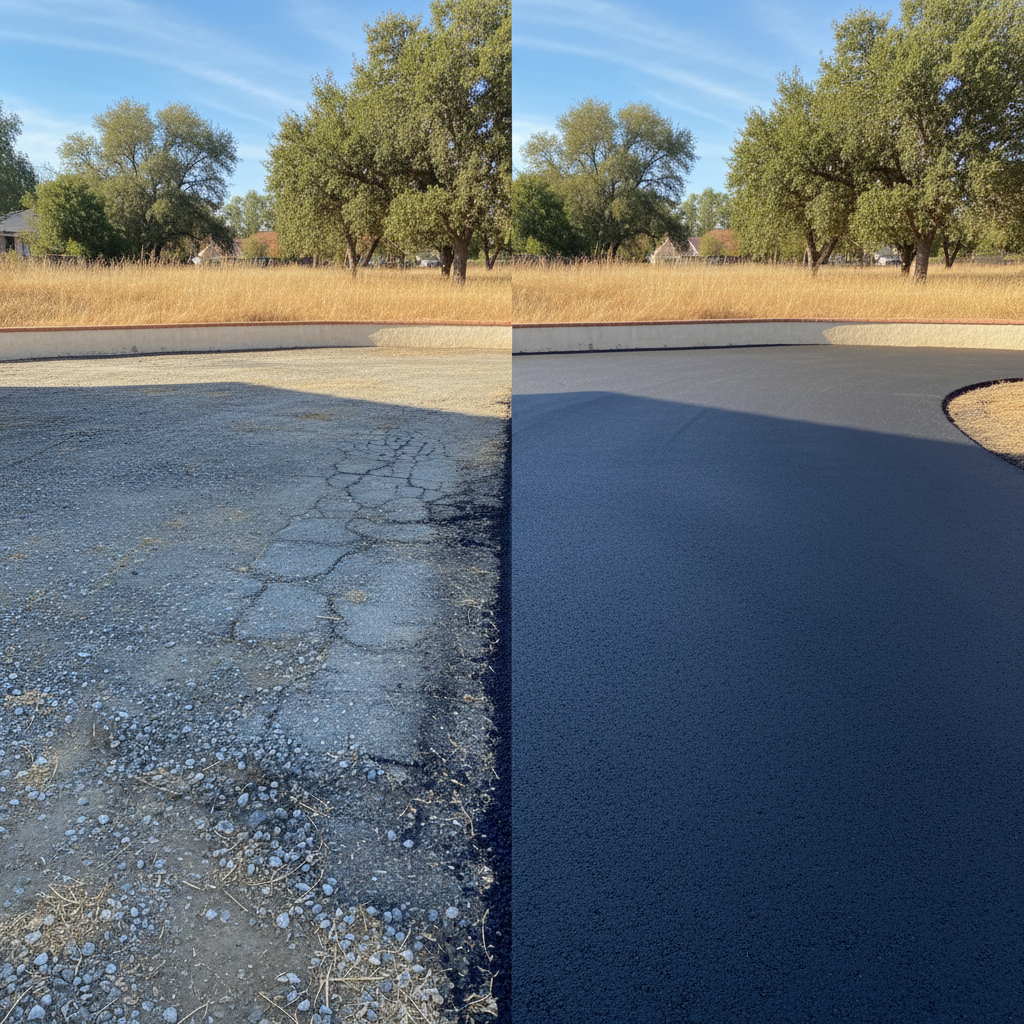
Got cracks, potholes, or just a tired-looking asphalt driveway right here in Fresno? You're probably wondering what your options are. Most homeowners find themselves weighing two main choices: a simple asphalt overlay or a complete tear-out and replacement. It's a big decision, a real head-scratcher, and you definitely want to get it right, especially with our hot summers and the occasional heavy rains we get.
What's an Asphalt Overlay?
Think of an asphalt overlay as a fresh new skin for your existing driveway. We're talking about putting a new layer of asphalt, usually 1.5 to 2 inches thick, right over your current, still-structurally-sound asphalt. But before we do that, we'll prep the surface. That means cleaning it thoroughly, filling any significant cracks or potholes, and often applying a tack coat – basically, a sticky liquid asphalt emulsion that helps the new layer bond to the old one. It's a popular choice for driveways that are showing wear and tear but don't have deep, widespread structural issues. Pretty straightforward, right?
What's a Full Asphalt Replacement?
A full replacement is exactly what it sounds like: we tear out everything. We remove all the old asphalt, sometimes even digging up the base material if it's failed or if we need to improve drainage. Then, we start from scratch. That means compacting the subgrade, laying down new aggregate base material, compacting that, and finally, applying one or more layers of fresh asphalt. This is the big kahuna, the most comprehensive solution, and it's what you need when your driveway's problems go deeper than just the surface.
Cost: The Wallet Factor
Let's be honest, cost is usually the first thing on everyone's mind. An asphalt overlay is almost always going to be significantly cheaper upfront than a full replacement. You're using less material, and there's less labor involved because we're not hauling away tons of old asphalt or rebuilding the base. For a typical residential driveway in a place like the Old Fig Garden area, an overlay could save you anywhere from 30% to 50% compared to a full replacement. It's a great way to get a fresh look without breaking the bank.
A full replacement, on the other hand, is a bigger investment. You're paying for demolition, hauling, new base material, and more asphalt. Sometimes, though, it's the only real option if you want a lasting fix.
Durability & Lifespan: How Long Will It Last?
This is where the distinction really matters. An overlay can give your driveway another 8 to 15 years of good service, assuming the underlying structure is solid. It's a great way to extend the life of your existing pavement. However, it's only as good as what's underneath it. If your base is failing, or if you've got extensive alligator cracking that indicates deep structural problems, those issues will eventually reflect through the new overlay. We call that 'reflective cracking,' and it's a common issue if you overlay a truly compromised surface.
A full replacement, when done right, gives you a completely new foundation. You're looking at a lifespan of 15 to 25 years, often more, especially with proper maintenance. It's the most durable solution because you're addressing any and all underlying issues from the ground up. Here in Fresno, with our expansive clay soils that can shift with moisture changes, a well-prepared and compacted base is crucial for long-term durability. That's something you really get with a full replacement.
Maintenance: Keeping It Looking Good
Both options benefit from good maintenance, but a full replacement generally requires less intensive care in its early years because everything is new. For an overlay, you'll want to keep an eye out for any reflective cracks that might appear and seal them quickly. Both will need regular sealcoating every 2-3 years to protect against our intense sun and prevent oxidation, and prompt patching of any potholes or cracks that develop. It's like taking care of your car – a little preventative maintenance goes a long way.
Appearance: The Curb Appeal Factor
Visually, both an overlay and a full replacement will give you a beautiful, smooth, dark black surface. They'll both significantly boost your home's curb appeal. The main difference in appearance comes down to how well the underlying issues were addressed. If an overlay is done on a surface with too many deep cracks, those cracks might eventually show through. A full replacement ensures a pristine, uniform look from day one, with no ghosting of old cracks.
My Recommendation for Fresno Homeowners
So, which one should you choose? Here's my take, based on what I've seen working on driveways all over Fresno:
- Go for an Asphalt Overlay if: Your driveway has mostly surface-level issues like minor cracking, fading, or shallow potholes. The base feels solid when you walk or drive on it, and you don't see widespread, deep alligator cracking. You're looking for a cost-effective way to refresh your driveway and extend its life for another decade or so.
- Opt for a Full Replacement if: Your driveway has significant structural problems. This includes deep, widespread alligator cracking, areas that are sinking or heaving, poor drainage that causes standing water, or if the asphalt has completely deteriorated in large sections. If you've got a really old driveway that's been patched countless times, or if you're planning to live in your home for many more years and want the most durable, long-term solution, a full replacement is the way to go.
Ultimately, the best way to decide is to have a professional look at your specific driveway. We'll assess the condition of your existing asphalt and the underlying base, talk about your budget, and help you understand what solution will give you the best value and longevity. Don't guess – give Charis Asphalt Solutions a call. We'll come out, take a look, and give you an honest recommendation so you can make an informed decision for your home.