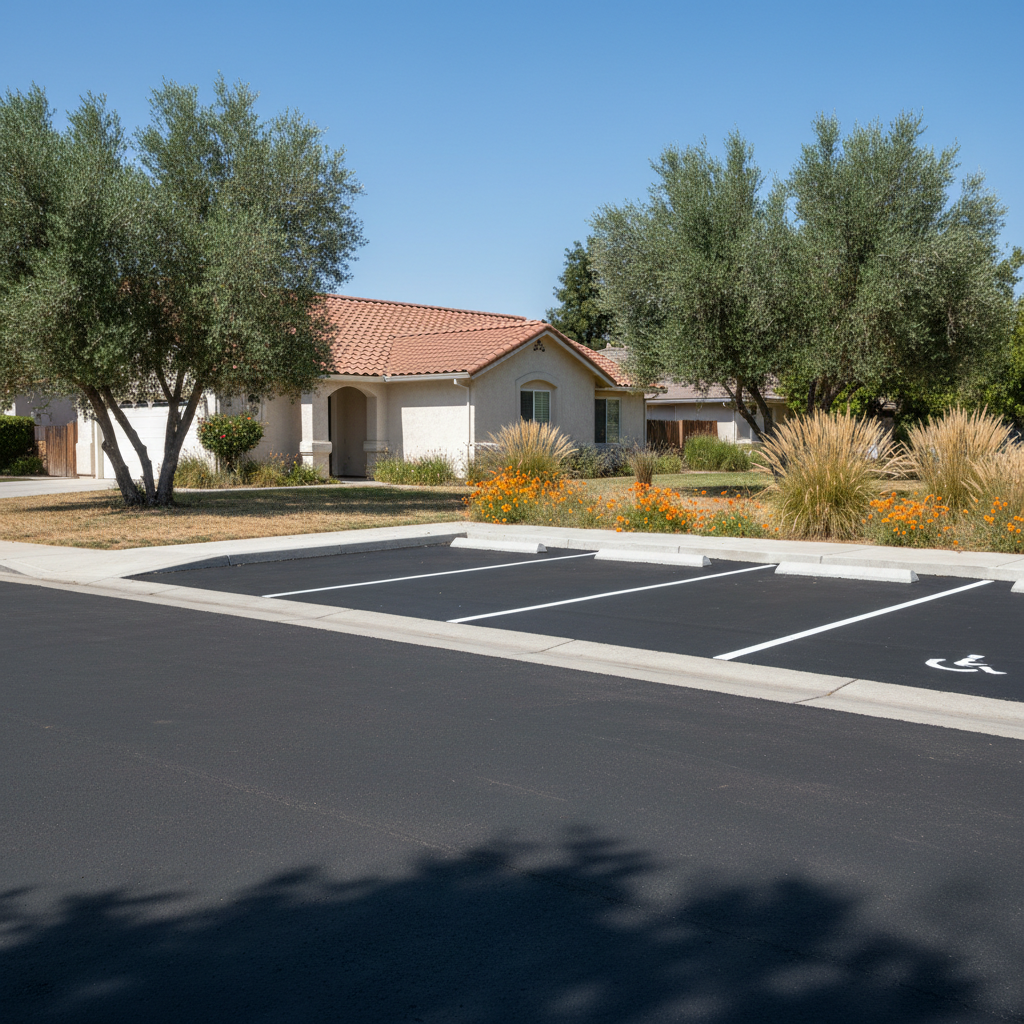
Ever wonder why some parking lot lines stay looking sharp for years, while others just fade away practically overnight? A lot of it boils down to timing and weather, especially here in Fresno. I've seen countless jobs over my years in this business, and I can tell you, when it comes to asphalt striping, Mother Nature really calls the shots on how long those lines will last.
When's the Best Time to Stripe in Fresno?
You might think you could just stripe any old day, right? Not really. The sweet spot for asphalt striping in Fresno is usually spring and fall. Why then? Well, it's all about temperature and humidity, pure and simple.
Spring (March to May): This is prime time. The ground's warming up, but it's not scorching hot yet. You typically get clear, dry days, and the nights aren't dipping too low. This lets the paint cure just right – it won't get too brittle from the cold or too soft from extreme heat.
Fall (September to November): Another excellent window, for sure. Similar to spring, you get those nice, moderate temperatures. The summer heat has finally passed, and we haven't hit our winter fog and rain season yet. The paint absolutely loves these conditions.
Now, can we stripe in summer? Sure, we can, but it's definitely trickier. Those triple-digit days we get in July and August? They can be really tough on paint. It dries too fast on the surface, sometimes before it's fully bonded underneath, and that leads to premature cracking or peeling. We often have to shift our work schedule to early mornings or late evenings to dodge the worst of the heat, which, honestly, can sometimes mean a higher cost or a slightly longer project timeline.
Winter? Forget about it, for the most part. Our winter mornings can be freezing, and we get a good share of Tule fog and rain. You absolutely cannot stripe on a wet surface, and cold temperatures stop the paint from sticking and curing correctly. If you try, those lines will be gone before you know it. It's just not worth throwing money away.
Weather Conditions That Affect Striping
Beyond the season, specific daily weather conditions are super important. Here's what I'm always checking before we even load up the truck:
Temperature: Most asphalt striping paints need both the air and surface temperatures to be at least 50°F and rising. If it's too cold, the paint won't flow right, and it won't cure properly. Too hot, and it can flash dry, trapping solvents and making it less durable.
Humidity: Low humidity is your best friend. High humidity, especially when it's also cooler, can really slow down the drying process. We've got a lot of farmland around Fresno, and sometimes that can mean more moisture in the air than you'd expect, even on a sunny day.
Moisture: This is a huge one. The surface absolutely has to be dry. Any moisture — dew, rain, even recent power washing that hasn't fully dried — will keep the paint from bonding to the asphalt. It'll just sit on top and peel right off. We always check for moisture before starting any job, no exceptions.
Wind: Strong winds can be a real pain. They can blow paint off course, leading to sloppy lines, and they can also make the paint dry too quickly, similar to really high heat.
Protecting Your Striping Investment Year-Round
You've put money into professional striping, so you want it to last, right? Here's how you can help protect those crisp lines:
Regular Cleaning: Keep your parking lot or driveway clean. Dirt, debris, and oil spills can degrade the paint over time. A good sweep or power wash (on a low setting, and be careful!) a few times a year can make a big difference.
Sealcoating: This is probably the best thing you can do for your asphalt. Sealcoating not only protects your pavement from UV rays, water, and chemicals, but it also gives you a fresh, dark surface for new striping to really pop. When we apply sealcoat at Charis Asphalt Solutions, we always recommend re-striping afterward for that fresh, new look.
Avoid Harsh Chemicals: Be careful with de-icers or strong cleaning agents. Some of these can be pretty aggressive and can eat away at your paint, not to mention the asphalt itself.
Address Pavement Issues Promptly: If you've got cracks or potholes, get them fixed. When the underlying asphalt starts to break down, the lines on top will go with it. Fixing these issues before they get worse saves you money in the long run and keeps your striping intact.
Getting your asphalt striping done right means understanding the local conditions. Here at Charis Asphalt Solutions, we know Fresno weather inside and out, and we plan our jobs accordingly to give you the most durable, professional-looking lines possible. Don't waste your money on a job that won't last just because it was done on the wrong day.