Alright, let's talk about asphalt patching. I get a lot of calls from folks around Fresno, from Fig Garden all the way to the newer spots out east, and a good chunk of 'em are asking about patching up their driveways. It's a common headache, especially with our scorching summers and the way the ground tends to shift a bit around here. So, I figured, why not put together some straight answers to the questions I hear most often? No fluff, just what you actually need to know.
What's the difference between patching and repaving?
This is probably the question I get asked most often. Think of it this way: patching is all about fixing a specific problem area. Maybe it's a pothole, or a section where the asphalt looks like alligator skin. You're just tackling that one spot, not messing with the rest of the driveway. We cut out the bad stuff, clean it up, then fill it with fresh asphalt. Repaving, on the other hand, is a much bigger deal. That's when we're either putting a whole new layer of asphalt right over your entire existing driveway (we call that an overlay) or, if things are really bad, completely ripping out the old stuff and laying down a brand new driveway from scratch (a full depth replacement). If your driveway's got damage everywhere, tons of big potholes, or just looks completely shot, you're probably looking at repaving. But for those smaller, isolated issues, patching can save you a lot of cash and make your existing asphalt last a good while longer.
When is patching actually worth it, and when should I just replace the whole thing?
Good question, and it really comes down to how bad the damage is. If you've only got a few potholes, some cracks here and there, or a small section that's crumbling, patching is definitely the smart move. It's affordable and can stop those little problems from turning into massive ones. We patch a lot of driveways that are otherwise in pretty decent shape. However, if your driveway looks like a giant spiderweb of cracks, has multiple large areas falling apart, or if the base underneath is failing and you keep seeing dips, then patching is just a temporary fix. You'd be throwing good money after bad, honestly. At that point, you're better off putting your money into a full replacement. I'll always give you my honest opinion when I come out to take a look.
How long does an asphalt patch last in Fresno's climate?
That's a tough one to give you an exact number for, because it depends on a few things. First, the quality of the patch itself – how well we prepped it, the materials we used, and how well it was compacted. Second, how much traffic that spot sees. And third, our lovely Fresno weather, of course. Those triple-digit summers and the occasional heavy rains can really beat up asphalt. A properly done patch using hot mix asphalt can last anywhere from 3 to 7 years, sometimes even longer, especially if you keep up with regular sealcoating. Cold patch, which is more of a quick fix, won't last nearly as long. I always recommend hot mix for a durable repair. The trick is catching the damage early, before water gets underneath the patch and starts messing things up.
Can I just do a DIY patch with stuff from the hardware store?
You can, but I generally don't recommend it for anything more than a tiny, temporary fix. That cold patch asphalt you buy in bags at the hardware store is fine for a quick fill if you've got a small, shallow pothole and just need to get by for a bit. But it's not built for the long haul. It doesn't stick as well to the existing asphalt, and it won't stand up to traffic and weather like a professional hot mix asphalt patch will. Plus, doing a patch right means cutting clean edges, cleaning out all the debris, putting down a tack coat, and compacting the new asphalt correctly. Without the right tools and materials, a DIY patch often falls apart quickly, and then you're paying someone like me to fix your fix. Save yourself the headache and call a pro for anything significant, alright?
What's the process for patching a driveway? What should I expect?
When Charis Asphalt Solutions comes out for a patching job, here’s the general rundown. First, we'll check out the damaged area. We'll mark out the section that needs to go, making sure to cut into solid, undamaged asphalt. Then, we use specialized saws to cut out that section, usually in a neat, rectangular shape. We pull out all the old, broken asphalt and clean out the base underneath, getting rid of any loose junk. Sometimes, if the base itself is messed up, we'll need to fix that too. Next, we apply a tack coat to the edges and base of the cutout. This helps the new asphalt bond properly. Then, we fill the area with hot mix asphalt, making sure it's slightly mounded. Finally, we compact the new asphalt with a vibratory plate compactor or a roller, making sure it's level with the surrounding pavement and really packed in there. You can usually drive on it within a few hours, but we'll let you know the exact timeframe.
How can I prevent new potholes and cracks after a patch?
Prevention is key, and it mostly comes down to maintenance and good drainage. First, make sure your driveway has proper drainage. If water is just sitting on your asphalt, it's going to find its way into cracks and cause damage, especially with our clay-heavy soil around Fresno. Make sure your gutters are working and pushing water away from the driveway. Second, get your driveway sealcoated every 2-3 years. Sealcoating protects the asphalt from UV rays, water, and oil spills – all major causes of deterioration. Think of it like sunscreen for your driveway. Third, address any small cracks as soon as you spot them with crack filling. Don't let them just sit there and grow. Catching problems early and keeping up with regular maintenance will really extend the life of your asphalt, patched areas included.
Will the patch match my existing driveway perfectly?
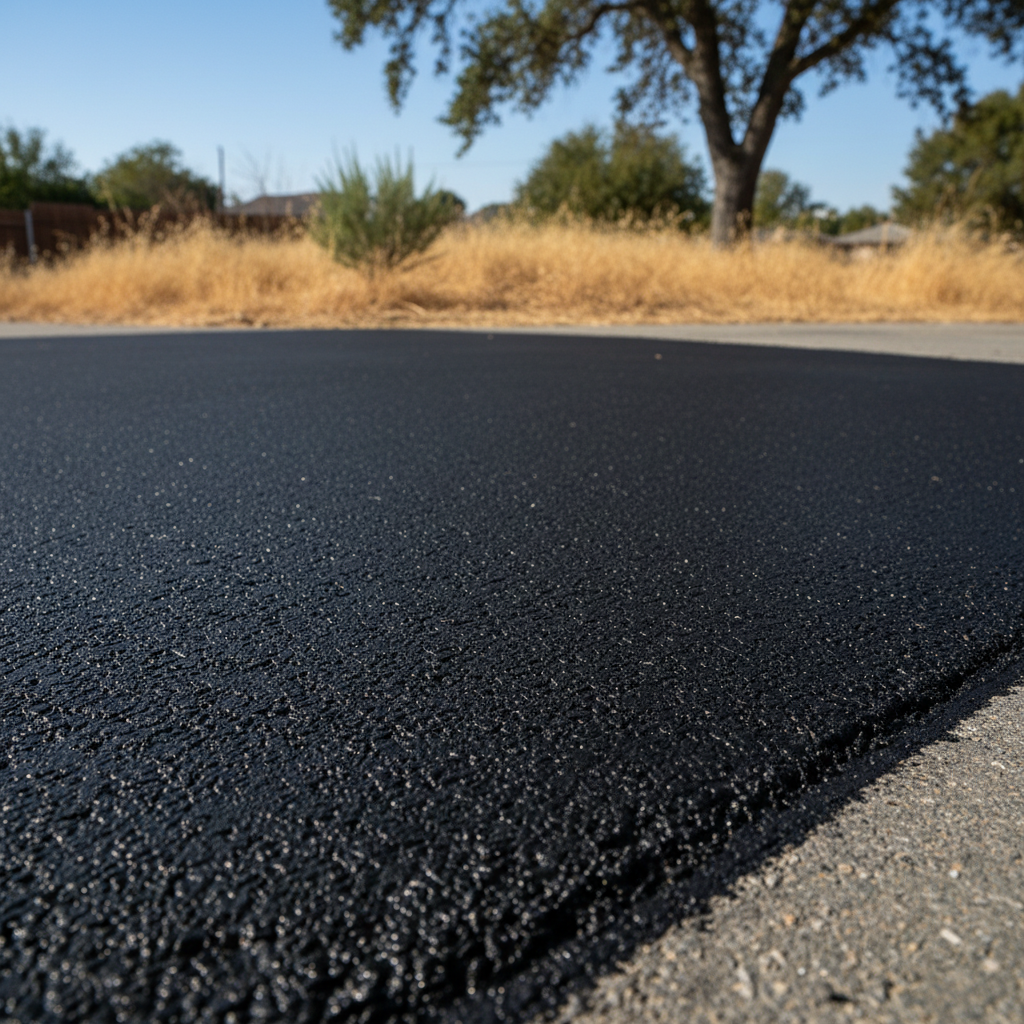
Honestly, probably not perfectly, at least not right away. When we put down new asphalt, it's a deep, rich black. Your existing driveway, especially if it's been baking in the Fresno sun for years, will have faded to a lighter gray. So, there will be a noticeable color difference between the new patch and the old asphalt. Over time, the new patch will weather and fade, blending in a bit more. The best way to get a uniform look across your entire driveway after patching is to have it sealcoated. A fresh sealcoat will darken both the old and new asphalt, making the patch much less noticeable and giving your whole driveway a refreshed appearance. It's not just about looks, though; sealcoating also protects the patch and the rest of your asphalt.
What's the best time of year in Fresno to get asphalt patching done?
For hot mix asphalt patching, you really want to do it when the weather is warm and dry. That means our spring, late summer, and early fall are perfect here in Fresno. The hot asphalt needs to cure properly, and that's much harder to achieve in cold or wet conditions. If it's too cold, the asphalt cools too quickly, making it harder to compact properly and get a good bond. If it's raining, well, asphalt and water just don't mix during installation. So, while we can sometimes do emergency cold patching in less-than-ideal weather, for a durable, long-lasting hot mix patch, aim for those warmer, dry months. It gives you the best results and makes sure the patch holds up against our valley's climate.